




Advertisement
Advertisement
A fresh alert has been issued concerning the growing population of 'zombie rabbits'.
These unfortunate bunnies have been seen both in backyards and in the wild throughout the US, leading to fears of a larger outbreak as their numbers continue to spread.
With concerns also mounting over 'zombie squirrels', it's undoubtedly a challenging time for animal enthusiasts.
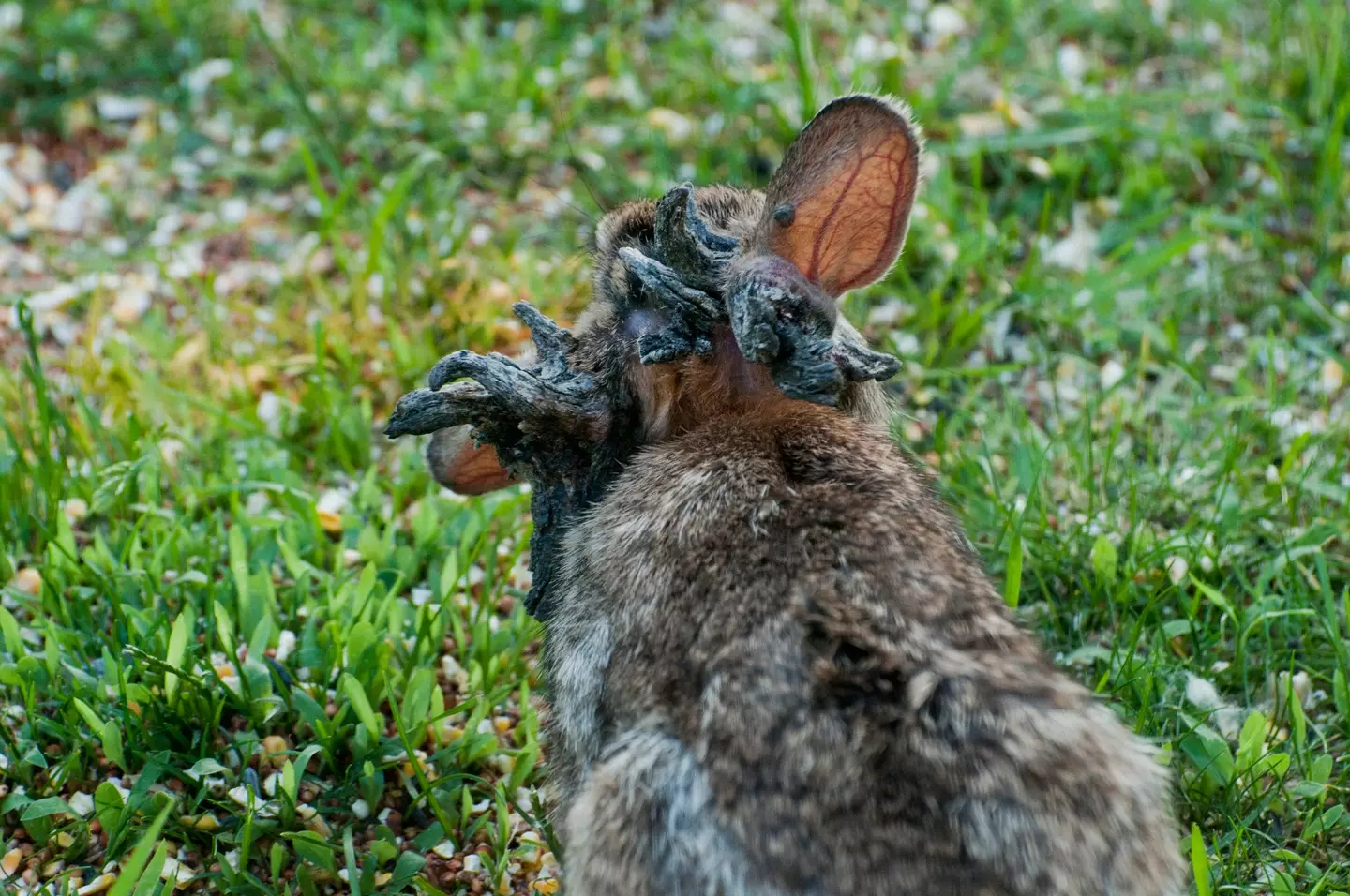
Initially, these rabbits were first spotted in Colorado, exhibiting peculiar tentacle-like growths on their faces, heads, necks, and shoulders.
Advert
However, there have now been reports of sightings in Minnesota, Nebraska, and South Dakota as well.
These growths have resulted in the creatures being dubbed 'Cthulhu bunnies', due to their resemblance to the fictional character created by H.P. Lovecraft.
But what exactly is happening to these poor rabbits?

Advert
The condition, which appears painful, has been attributed to the cottontail rabbit papilloma virus, also known as the Shope papilloma virus, transmitted through mosquito and tick bites.
Previously, experts reassured the public that these infected rabbits posed no threat to humans, with the virus being transmissible only among rabbits. However, a doctor has now advised caution in handling the bunnies, despite the urge to assist them.
Dr. Omer Awan, from the University of Maryland School of Medicine, told the Daily Mail about the risks, explaining how contact could lead to other infections or diseases.
"While you're not going to contract CRPV and likely won't exhibit its symptoms, there is a risk of indirect exposure through ticks or mosquitoes that have fed on infected animals, potentially leading to a different disease," he stated.
Advert

Ticks can carry Lyme disease, a condition that many celebrities have been diagnosed with, including Justin Bieber and Justin Timberlake.
These insects also carry Rocky Mountain Spotted Fever, while mosquitoes are known carriers of various illnesses such as the West Nile Virus, Zika Virus, Dengue Fever, and Chikungunya.
Dr. Awan advised that the best course of action is to avoid the rabbits and keep pets away from them as well.
Advert
He mentioned that we shouldn't be surprised if cases continue to rise, telling the outlet: "With temperatures becoming warmer, we're likely to see it become more prevalent as years pass, spreading to new areas."
He added: "I do believe that this issue will become more prominent over time."
Although he says it is 'extremely unlikely' for CRPV to transmit to humans, he does not completely rule it out: "In science and with viruses, you can never say never, as they mutate and situations can change rapidly. However, I don't foresee that happening with CRPV in the near future."
Advert
The warmer weather is blamed for the spread, according to the doctor: "This is the period when mosquitoes and ticks thrive in these warm temperatures, allowing them to infect more rabbits, leading to an increase in CRPV cases."
It's not just CRPV that is on the rise, as he warns: "For instance, Lyme disease is now being seen in regions where it was previously unheard of, such as southern Canada and northern states on the East Coast, like Maine."
Advertisement
Advertisement


Advertisement


